


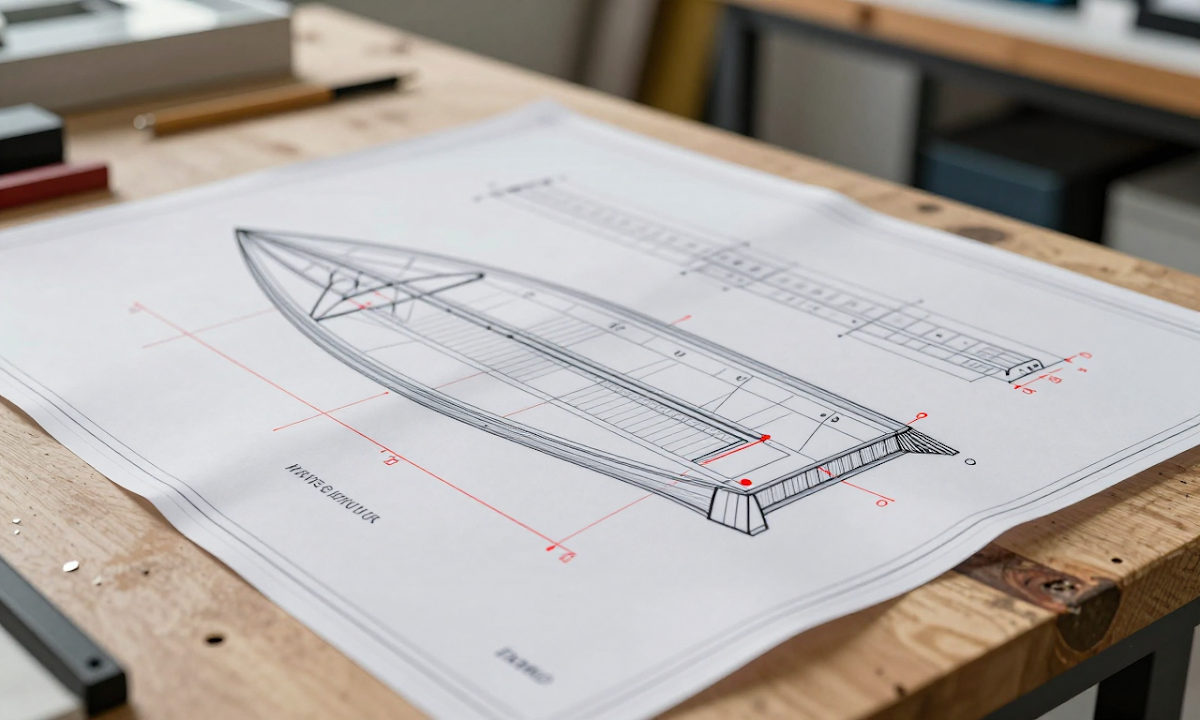
You've spent months saving for your dream vessel, but scrolling through online galleries might have left you questioning one thing: could you be building from unreliable boat plans? The frustration of discovering structural weaknesses after cutting the first beam is avoidable.
This guide shows you exactly how to spot inaccurate boat blueprints before you buy them. You'll learn what faulty boat designs commonly hide, practical methods for verifying plan quality, and research techniques that separate solid construction from poor quality boat plans. By the end, you'll have a clear checklist for evaluating any set of plans so your building project starts on solid ground.
In this article:
- Recognizing Signs of Unreliable Boat Plans
- Causes of Inaccurate Boat Designs
- Verification Methods Before Building
- Testing Plan Reliability Through Research
- Frequently Asked Questions
- Final Thoughts
Recognizing Signs of Unreliable Boat Plans
When reviewing boat design documents, builders must look for specific warning signs that indicate poor quality preparation. Missing critical dimensions throughout the layout often signal incomplete research by the original author. Without precise measurements for beam width, hull length, or plank spacing, a builder cannot accurately cut materials or predict structural integrity.
Inadequate Joinery Details
Unclear joinery instructions represent another major red flag in plan evaluation. Professional boat builders rely on specific terminology and step-by-step assembly guides to ensure watertight construction. When plans fail to explain how frames connect to keels or how planks lap together, the risk of leaks increases dramatically during operation.
- Missing bevel angles for scarf joints indicates rushed preparation
- Absent fastener specifications suggest lack of testing
- Vague glue-line recommendations compromise structural bonding
Builders should also examine whether the plans include load distribution calculations or stability charts. Reliable documents typically provide center-of-gravity data and displacement information essential for safe operation in various sea conditions. The absence of such technical specifications often points to designs that have never been water-tested under real-world circumstances.
Inconsistent Scale Drawings
Inaccurate scaling between different sections of the plans reveals fundamental errors in drafting. When a side profile contradicts top-down views, builders face impossible construction challenges. Professional plans maintain consistent proportions across all diagrams and provide verification measurements at multiple points throughout the document.
Finally, check whether the plans include material specifications with grain directions and thickness recommendations. Generic descriptions without specific hardwood or softwood requirements suggest the designer has not considered practical construction limitations. These overlooked details often result in structural weaknesses that only become apparent after construction is complete.
Causes of Inaccurate Boat Designs
Errors in boat construction drawings often stem from outdated drafting methods that predate modern digital verification tools.
Outdated Design Methods
- Paper-based calculations were prone to transcription mistakes when dimensions passed between multiple drafters.
- Manual curve interpolation frequently produced hull shapes that deviated from the intended hydrodynamic profile.
These traditional techniques lacked the precision of contemporary computational geometry software, allowing small errors to accumulate throughout a design document.
Poor Documentation Practices
- Incomplete dimension chains forced builders to make assumptions about measurements not explicitly stated in the original plans.
- Unclear scaling references made it difficult for subsequent readers to accurately translate two-dimensional drawings into three-dimensional structures.
When documentation fails to account for material thickness variations or fastener placement requirements, the resulting construction often deviates significantly from the designer's original specifications.
Lack of Peer Review
- Isolated design processes prevented experienced boatbuilders from catching obvious flaws before publication.
- Insufficient testing protocols meant many plans were released without validating performance claims through actual water trials.
The absence of systematic quality control measures allowed inaccurate specifications to enter the marketplace, sometimes reaching multiple builders who relied on the same flawed source material.
Economic pressures in the boat plan industry also contributed to reduced verification timeframes. Publishers seeking faster turnaround often sacrificed thorough testing and comprehensive documentation review for speed to market.
Built-in verification routines can catch discrepancies before cutting begins.
- Draft measurement check- compare three independent dimension chains to ensure they converge at the same point.
- Hull symmetry test- measure corresponding points on both sides and verify tolerances within 1/8 inch.
- Buoyancy calculation- compute expected displacement against stated load capacity; large gaps indicate flawed design data.
A common mistake is assuming published plans have undergone independent verification. Builders often skip cross-checking because they trust the source or lack time for thorough review. This assumption becomes dangerous when modifications compound existing errors in the original specifications.
Verification Methods Before Building
Verifying plan details before cutting timber requires a systematic approach to ensure every dimension matches your intended build.
Gather Original Specifications
- Download all measurements from multiple sources including PDF files and printed copies.
- Create a master spreadsheet with each beam length, frame spacing, and hull curvature data.
- Note any discrepancies between different versions of the same design documentation.
Cross-referencing these specifications against published naval architecture standards helps identify potential errors in the original plans. Standard boat building practices include specific framing intervals and structural support requirements that should be evident in reliable designs.
Analyze Structural Integrity Claims
- Examine load distribution calculations for keel,龙骨, and transom connections.
- Compare hull thickness recommendations against similar vessels of the same size class.
- Review rivet placement patterns and reinforcement requirements at stress points.
Reliable boat designs incorporate proper structural reinforcement at critical junctions where maximum stress occurs during normal operation. Faulty plans often show inadequate support systems or missing bracing that would compromise vessel stability under typical loading conditions.
Contact Previous Builders
- Search online forums for completed builds using identical specifications.
- Request feedback from owners who have sailed the specific design over extended periods.
- Determine whether original builders required any modifications during construction.
Real-world performance data from existing vessels provides the most accurate verification of plan reliability. Owners often discover practical issues that theoretical calculations cannot predict through actual ocean conditions and daily use patterns.
Testing Plan Reliability Through Research
Validating a boat design before cutting timber requires systematic research rather than casual inspection. The most effective approach involves cross-referencing the same blueprint across multiple independent sources to identify consistent errors or glaring omissions that might indicate faulty specifications.
Comparing Multiple Sources
- Search archived forums where experienced boatbuilders discuss specific plans and their real-world performance. Look for repeated questions about unclear dimensions or structural weaknesses.
- Check different online repositories that host the same design to see if errors persist across versions, which suggests inherent issues with the original documentation.
- Examine published build logs from other builders who constructed identical vessels. These often reveal practical problems not apparent in technical drawings alone.
Broadly examining inaccurate boat blueprints in various collections helps establish whether errors are isolated incidents or systemic flaws in the design methodology.
Evaluating Builder Feedback
- Contact previous builders directly when their contact information is available. Real-world experience often surfaces problems that theoretical analysis misses entirely.
- Look for patterned complaints across different builds of the same design, which strongly suggests poor quality boat plans rather than isolated builder errors.
- Assess response quality from plan publishers who address concerns promptly and offer corrections demonstrate commitment to accuracy over quick sales.
Building a comprehensive research file with documented sources creates accountability for the design's reliability claims.
The goal is not finding perfect plans, since some level of modification is normal in boatbuilding. Instead focus on identifying designs with well-documented track records and responsive publishers who value builder feedback as much as initial sales figures.
Frequently Asked Questions
What are the most common errors found in unreliable boat plans?
Unreliable boat plans often contain measurement inconsistencies that cause structural weaknesses during assembly. Inaccurate hull dimensions can lead to poor water performance or stability issues. Faulty design specifications may result in improper joinery requirements or incorrect material thickness recommendations. These errors frequently stem from unverified source materials lacking professional marine engineering oversight, potentially compromising both safety and functionality of the final boat construction.
Can I trust free boat plans from online sources?
Free boat plans vary widely in quality. Some reputable builders share verified designs for specific hull types, but many lack construction details or testing data. Always cross-reference with multiple sources and review community feedback before starting a build.
How do I verify hull dimensions before purchasing plans?
To verify hull dimensions before buying plans, cross-reference beam and length measurements with similar boats from trusted builders. Request a detailed dimension sheet from the seller and compare it against published data for comparable vessel types. If possible, view a completed example or request builder references to confirm accuracy.
Final Thoughts
Builders can avoid headaches by verifying sources before cutting timber.
The three key takeaways are: check for community validation, compare dimensions across multiple plans, and test critical joints with paper models first.
Final Summary
Using these steps ensures you build a safe boat without costly mistakes from unreliable sources. This approach protects your investment in time and materials while delivering a seaworthy vessel.


Tidak ada komentar:
Posting Komentar